
Rootedness and Reclamation:
A Story of Becoming

This reflection was born during a professional development session led by Koren Clark of KnowThyself, Inc., whose beautiful presentation on storytelling invited us to explore who we are becoming. This journey is ongoing—meaningful and healing. It’s not about staying fixed in our stories as they are, but about confronting oppressive patterns and creating a plan that honors our peace. It’s about tending to our relationships without minimizing our truth.
This piece brings together writings I’ve created to share at this workshop.
The Bronx, Longwood Avenue
Back home in The Bronx, in the heart of Longwood, my husband and I birthed a church in January 2014 during the polar vortex. It was more than a building—it was a heartbeat in a neighborhood seeking refuge and wholeness. Starting the church awakened something deep in me: a hunger to live out my faith in ways that honored both my cultural roots and the voices around me. Our congregation—defined as the working-class poor, yet rich in relational capital—revealed to me what I always knew-that abundance is not measured in dollars. Someone might offer food using their food stamps to help fund a block event, another would bring arroz con gandules leftovers from dinner to someone’s home as an offering. Their generosity was my mirror, showing me how to lead with open hands and without pretense. We were oneness without sameness— my role was not to “fix,” but to walk alongside-con mi gente.
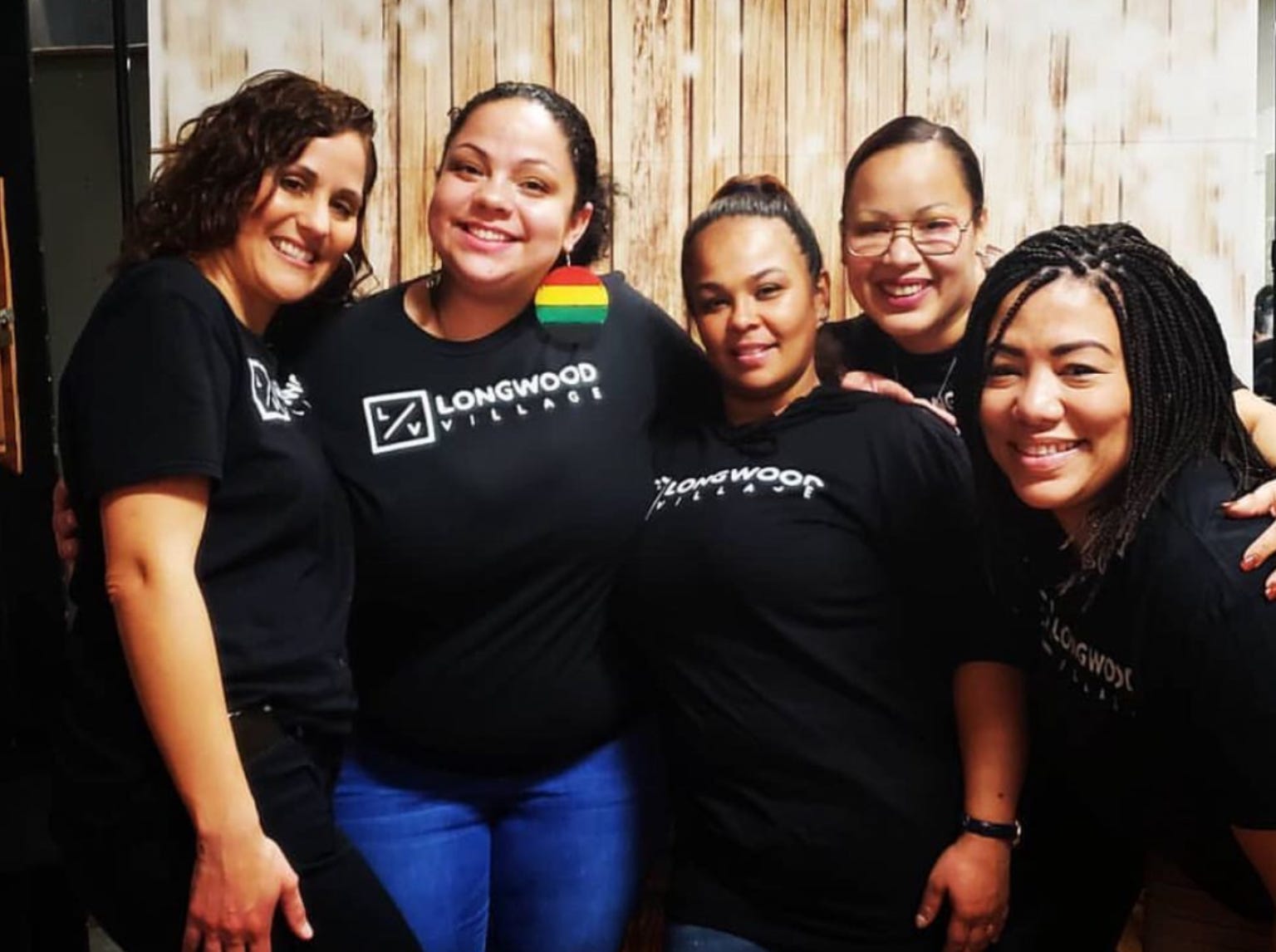
Back in 2018 Volunteer Appreciation Day
Roots in the Street
Before that, my roots were set on Creston Avenue. My summer water park was a broken fire hydrant—la pompa. Stickball, double dutch, hopscotch—all played side by side with my friends and neighbors. I didn’t have much, but I had friends who were like family to me. That belonging was my first teacher, shaping my instinct to build spaces where people are seen, safe, and celebrated.
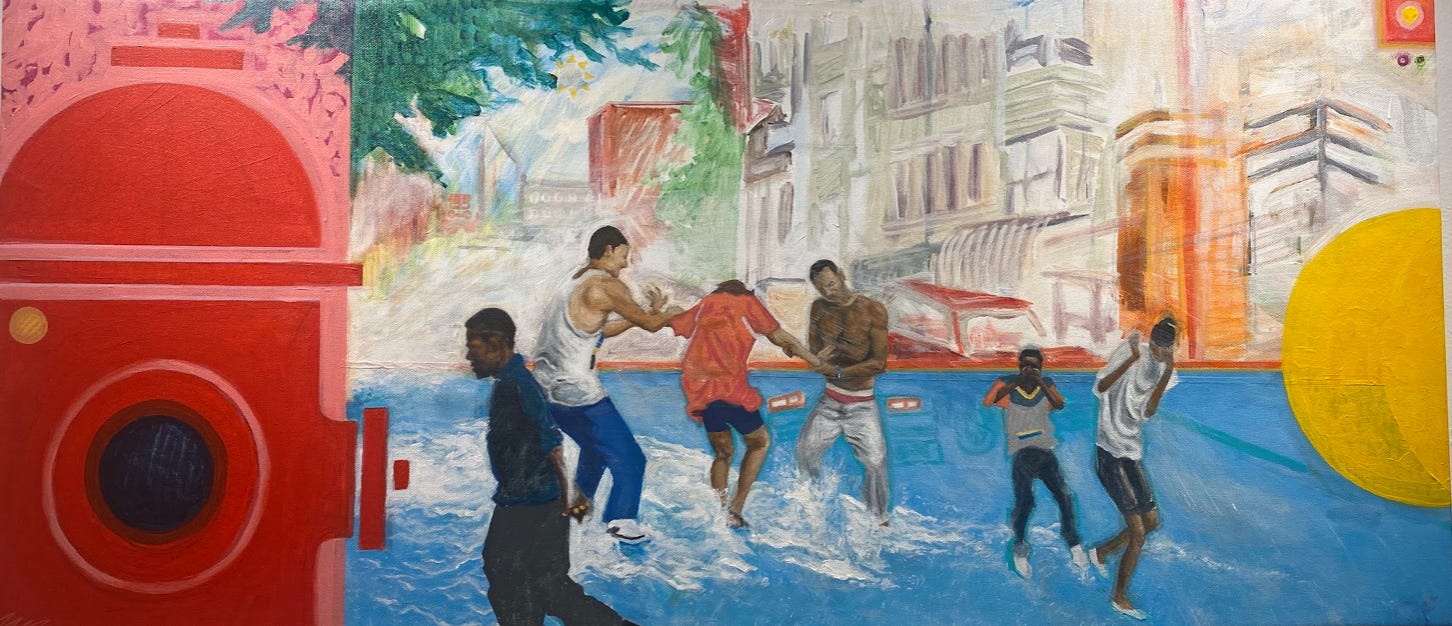
Painting by my son, Benjiman Rivera, titled “Take It Easy.” It has been featured in two exhibits here in D.C.
A Sudden Shift
Then came the pandemic. My husband made a hard decision to sunset the church. The physical space, the stoop life, the block party vibe—it all vanished.
In December 2021, we packed a U-Haul and left the Bronx for Washington, D.C. The drive was 4–5 hours long. KRS-One blasted on the stereo to keep us sane. And when we got there? No stoop, no pompa in the streets—but I was still grateful. No more laundromat runs.
A New City, New Challenges
In D.C. Capital Hill, things felt unfamiliar. White dominant spaces, unspoken codes of belonging, microaggressions wrapped in sarcasm. Comments like, “Is this the Puerto Rican-only table?” laced with sarcasm. or “The Riveras always make their presence known.”
“That’s right,” I would think and say out loud, “¡Los Boricuas are here!”
But inside, I knew these comments weren’t just jokes—they chipped away at my wholeness and dignity, slowing the part of my evolution that was learning to be unapologetic in every room. I had come from a place where my culture was celebrated as normal, necessary, and alive. Here, I found myself questioning whether my fullness could be welcomed, or if I had to tuck pieces of it away to belong.
Back home, affinity groups weren’t needed—we were the circle. Latinx, Black, and Brown communities shared space, energy, and appreciation for one another’s cultural roots. When people from the outside joined, they felt welcomed—not because we conformed to Eurocentric ways of being, but because our authenticity was the norm. Yet, deep down, even in those spaces, our ways were often quietly questioned.
Boricua, Through and Through
But I’ve always known who I am.
Boricua.
Nuyorican.
Daughter of San Juan Bayamón and the Lower East Side.
I was born in 1976, in a house filled with salsa, congas, and Hector Lavoe on vinyl. My mom scrubbed floors on her knees with a brush while rollers danced on her head. My dad made morir soñando like it was a sacred offering—orange juice, carnation milk, ice, and love.
Language and Loss
And yet, a part of me felt missing.
Spanish—yes, a colonized language—was still my inheritance. But I didn’t grow up fluent. My father insisted we speak English; he believed that was the only way we could survive in the U.S.
When he passed away in 2002, I began to ask myself why. Why didn’t I learn Spanish in my own home? Why didn’t I push back?
I later learned that by 1902, English became the mandated language of instruction in Puerto Rico—a forced erasure that shaped generations.
Knowing this history didn’t just answer the “why.” It reawakened a part of me that wanted to reclaim what had been taken. Learning Spanish as an adult became an act of resistance, but also an act of remembering—of calling back the woman I had always been, even before I had the words.
Reclaiming Tongues, Reclaiming Self
That loss became a wound I began to heal.
In 2018, I attended an Embracing Equity conference. I shared how my father spoke only in Spanish, and my mom translated. Trisha Moquino listened, then said:
“I hear this story all the time.”
That simple phrase reminded me—I wasn’t alone.
Since then, I’ve been reclaiming the language, reclaiming my story.
Ancestors & Accountability
When we say words like batea, bohío, iguana, Boricua—we are speaking Taíno.
We are speaking about memories.
We are speaking of resistance.
We are remembering who we’ve always been.
The Work of Storytelling
Through my prayers, moments of meditation, deep breaths, my work, my relationships, my connection to nature, and my walk on this earth—this divine creation—I find the sacred. I tell these stories not only for myself and my continued healing, but for the children and families who need the courage to tell their own.
Identity isn’t inherited by accident—it is shaped by the stories we tell and the language we speak. When children see us—people who share their culture, their rhythm, their sabor—they begin to see themselves. And that, too, is liberation.